
Joint stability in the stifle (or true knee) is maintained by 4 ligaments, which crises cross over each other to give the knee support, flexibility and movement. This is a common injury, which occurs to the joint, caused by sudden twist of the knee, slipping on surfaces, obesity, trauma, breed predisposition and general wear & tear.

4 grades of damage:
- Grade 1: minimal tear or sprain of a ligament with a degree of internal bleeding.
- Grade 2: Partial tear of the ligament.
- Grade 3: Complete rupture of the ligament.
- Grade 4: Ligament tears and takes with it small pieces of bone.
Symptoms Include:
- Crying out in pain.
- Lameness / Limping.
- Inflammation/swelling/heat.
- Unable to weight bear equally on hind limbs.
- Reluctance to straighten leg.
- Reluctance to exercise.
Benefits of Clinical Canine Massage Therapy – Grades 1 & 2:
- Minimising pain.
- Increases mobility.
- Encourages normal weight distribution.
- Strengthening of injured leg.
- Decreases and minimises area of overcompensation.
- Encourages normal weight distribution.
NOTE – Massage cannot be performed on grades 3 & 4, BUT following surgery it can benefit by:
- Encouraging equal weight bearing on all four limbs.
- Building muscle to stabilise the leg.
- Increases recovery time after operation and makes recuperation time more comfortable.
- Increases mobility of the affected limb to minimise damage to the good limb.
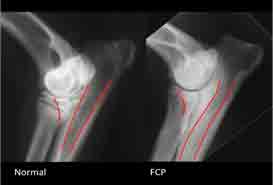
Abnormal development of the elbow joint. Basically, the 3 bones of the joint – humerus, radius and ulna do not fit together properly, which leads to abnormal high contact pressure and the elbow does not work as effectively as it should do. Secondary osteoarthritis can follow, and the elbow will become swollen and painful. Elbow Dysplasia is primarily genetic, however, environmental factors such as breed predisposition, obesity as a puppy, over exercising a young dog, excessive use of stairs, injury or trauma to the joint when the dog is still young.
Symptoms Include:
- Stiffness.
- Forelimb lameness.
- Reduced range of motion.
- Reluctance to exercise.
- Abnormal elbow placement.
- Pain when extending or flexing the elbow.
Benefits of Clinical Canine Massage Therapy:
- Pain Management.
- Promote natural range of movement.
- Relieves muscle tightness from overcompensation.
- Reduces tenderness and pressure throughout the entire body.
- Helps reduce spasms and trigger points (knots) especially in lower neck and shoulder area.
- Helps with pre and post-operative care.
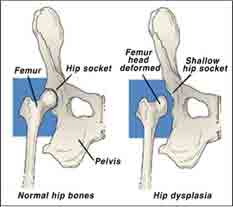
Hip Dysplasia is normally an inherited condition, environmental factors can also play a role in the development of the condition e.g. poor diet, exercise, overweight, exercise, poor hind limb muscle development, and bedding contributing to the onset.
What happens is ball and socket of the hip joint don’t fit together snuggly and move, as they should do, which causes friction, which will cause damage to the joint and will be very painful.
The dog’s body will compensate for the hip, causing problems with the spine, stifle and possible other soft tissue difficulties and in later years will lead to osteoarthritis.
Symptoms Include:
- Limping.
- Change in posture and gait/movement.
- Difficulty going up and down stairs / getting up.
- Reluctance to exercise.
- Stiffness especially following rest.
- Stiffness after exercising.
- Bunny hopping whilst walking or running.
- Inflammation.
Benefits of Clinical Canine Massage Therapy:
- Aids mobility and increases flexibility.
- Assists in posture and gait/movement.
- Strengthens muscles and relieves tension in other muscles of the body.
- Aids in pain relief and improves quality of life.
- Promotes blood flow to the affected area, which helps reduce inflammation.
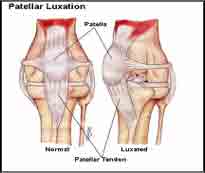
Also known as a “Floating Kneecap”. What happens here is the patella (Kneecap) will dislocate and slide out of its normal position by moving the patella from side to side instead of up and down. This happens as the grove in which the patella sits is too shallow. Luxation Patella is caused by breeding and genetics of the dog, malformation during the growth phase in a puppy and trauma to the knee i.e. a dog who’s home consists of laminate flooring (Slippy flooring).
Symptoms Include:
- Lameness.
- Clicking around the knee.
- Pain.
- Stiffness.
- Hop, hop, and skip movement.
- Altered gait/movement e.g. unable to straighten affected leg and walks in a crouched position.
Benefits of Clinical Canine Massage Therapy:
- Improves comfort and reduces pain.
- Relieves tightness of the spine.
- Improved mobility.
- Areas of overcompensation and referred pain can be minimised.
- Improves gait and activity levels.
- Helps return to normal, sensible exercise levels.
- Aids recovery after an operation on the knee.
A degenerative, non-inflammatory condition of the spinal column characterised by the production of bony spurs along the bottom, sides and upper aspects of the vertebrae of the spine. These bony spurs are basically projected growths of bone, usually grown in response to injury and old age.
In dogs, Spondylosis most often occurs in the area of the spine behind the chest and on the upper section of the vertebrae on the lower back. Older, large breeds of dog are at the highest risk of developing this condition.

Symptoms Include:
- Pain.
- Restricted motion/stiffness.
- Pain may follow fracture of bony spurs or bridges.
- Clients are typically asymptomatic (Absence of symptoms) the growth of the bone can be felt when touching your dog before you will notice any behavioural changes as a result of the growth.
Benefits of Clinical Canine Massage Therapy:
- Provides comfort and relief from pain with gentle massage.
- Promotes mobility and flexibility.
- Helps to control the referred pain due to nerve irritation.
* Areas of bony spurs are treated with extreme care.
Also referred as Degenerative Joint Disease (DJD). A chronic, degenerative joint disease that is caused by the progressive inflammation and deterioration of the cartilage, bone and soft tissue of one or more joints.
When the cartilage that line the bones in a joint breaks down, the joint effectively loses its “cushion”. This causes friction between the bones, which leads to pain and decreased mobility in the affected joint(s). Inflammation of the cartilage can also stimulate bony growths (spurs) to form around the joints and thickening of soft tissue.
The most commonly affected joints in the dog’s body are; hips, elbows, Stifle (knee), wrists (carpus), hock (ankle) and intervertebral joints (backbone), particularly lower back. Although Osteoarthrosis can appear in any joint.
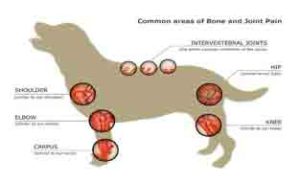
Signs that you’re Dog has Osteoarthritis:
- Stiffness in the morning that improves as the day progresses.
- Lameness in one or more limbs.
- Reluctance to climb stairs or difficulty jumping up.
- Difficulty or hesitation to get up or sit down.
- Licking or chewing at the painful joint.
- Pain when handled.
- Reluctance to rise or difficulty rising.
- Signs that your dog may not want to put weight on the limb.
- Sensitivity when touched in certain areas.
- Abnormal behaviours in the dog such as withdrawal, irritability or aggression.
Benefits of Clinical Canine Massage Therapy:
- Reduces pain and swelling.
- Relieves muscle tension.
- Improves mobility and flexibility.
- Improves circulation generally.
- Warms surrounding muscles making them more supple.
- Helps to relax overcompensating muscles as well as stiff muscles.
- May help slow down the degeneration process.
An impact or a traumatic event is the main cause of a broken bone, however certain diseases including cancer can also be a cause of a broken bone.
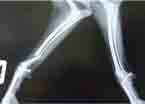
Symptoms Include:
- Pain – especially when moving.
- Deformity at the site of the injury.
- Swelling.
- Bruising.
- Reluctance to weight bear.
- Resistance to being touched.
Benefits of Clinical Canine Massage Therapy:
- Increase the healing process.
- Strengthens the limb.
- Reduces swelling and inflammations.
- Provides relief from pain.
- Improves flexibility and mobility.
- Improves gait and posture.
- Helps relieves areas of overcompensation.
- Can reduce scar tissue.
- Helps reduce stress.
Massage can only be performed once the healing process has taken place.