Most common amongst smaller dogs, intervertebral disc disease (IVDD) affects the discs between the vertebrae of the spinal cord. IVDD is characterized by the deterioration, displacement, bulging, or herniation of intervertebral discs. This trauma puts pressure on the nerves running through the spinal cord, causing nerve damage, pain, and in severe cases, even paralysis. IVDD typically causes the muscles surrounding the spinal cord to spasm and weaken.

Symptoms Include:
- Noticeably reduced mobility.
- Excessive anxiety.
- Hunched back.
- Muscle spasms in back or neck.
- Shaking or Trembling.
- Dragging legs when walking.
- Collapsing.
- Sensitivity to touch and movement.
- Reduced appetite.
- Less interest in the usual activity like walks.
- General weakness.
- Difficulty moving head and neck.
Benefits of Clinical Canine Massage Therapy:
- Increased lymphatic and blood circulation, hence feeds the cells and gets the blood to the muscles that aren’t being used.
- Speeds up natural healing.
- Improved mobility of tissues.
- Treats overcompensation, especially in the dog’s neck, shoulders and front legs.
- Rebuild muscle atrophy (wasted) muscles in unused limbs.
- Release of endorphins, which help to relieve pain.
A progressive dysfunction of the hind limbs. It is as a result of the body attacking its own nervous system and is quite often referred to as the canine version of multiple sclerosis. Many dogs do not exhibit pain or discomfort but rather a loss of control over their back legs, particularly when navigating corners. You may see what we call the drunken sailor walk or ataxia as it is clinically known.
It is suggested that CDRM is an auto immune disease (where the body attacks itself) and some have put CDRM down to degeneration of the spinal cord and their nerve routes which are responsible for innervating the muscle to move.
Symptoms Include:
- Ataxia.
- Lack of hind limb coordination.
- Falling over.
- Swaying.
- Worn nails and scuffing of their toes.
- Loss of proprioception (the sense of where your limbs are).
- Knuckling over.
- Postural misalignment.
- Dragging legs.
- Paresis (partial or impaired movement).
Benefits of Clinical Canine Massage Therapy:
- Helps to make the dog more comfortable by reducing areas of overcompensation particularly in the neck and shoulder as the dog will typically be using the front end more to pull the rest of their body.
- Increasing blood flow and circulation.
- Stimulating peripheral nerves.
- Helps your dog to gain more awareness of the rest of their body to allow them to cope with lack of senses from the back end.
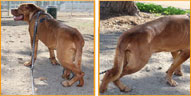
A severe and painful progressive arthritis in the joint at the bottom of the spine. The spinal canal gets narrower as arthritis gets worse and compresses the nerves in that area, making it extremely painful for your dog to walk or wag his tail. Also, the disc between the sacrum and the vertebra is usually deformed, which causes more compression on the nerves.
Symptoms Include:
- Difficulty getting up.
- Poor coordination.
- Posture changes.
- Not able to climb stairs.
- Weak rear legs with muscle loss.
- Trouble urinating or defecating (sometimes causing incontinence).
- Dragging rear paws.
- Unable or unwilling to move tail because of the pai.
- Shuffling and scuffing toes.
- Chewing on rear legs and tail (possibly causing a lot of damage).
Benefits of Clinical Canine Massage Therapy:
Surgery may be required; this will depend on the severity of the condition.
- Increased circulation so that lymphatic, blood and nutrients feeds the cells and gets the blood to the muscles that aren’t being used especially in the less mobile dog.
- Helps to relieve areas of muscular overcompensation, particularly in the neck and shoulder muscles.
- Relieves muscle spasms along with the back muscles and in the affected limbs.
- Encourages the production of endorphins – the ‘feel-good’ hormones.