
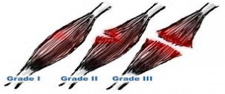
A strained or pulled muscle is an injury to the muscle or tendon. Commonly caused during exercise, working or sporting accidents. Its where the muscle or tendon (part of the muscle that attaches to the bone) over stretches and over contracts. The muscle will either be partially or totally torn and dependent on the severity there is likely to be swelling, bruising or discomfort.
When a muscle has been strained, scar tissue will form and this can prevent the muscle moving to their full capacity and preventing natural movement.
Strains can go undiagnosed and are painful and debilitating and shouldn’t be underestimated!
Symptoms Include:
- Stiffness.
- Lameness.
- Yelping or crying in pain.
- Inability to walk.
- Loss of strength in the muscle.
- Swelling / inflammation.
- Loss of appetite.
Benefits of Clinical Canine Massage Therapy:
- Improve stiffness and soreness.
- Improve movement/gait and posture.
- Breaking down of scar tissue.
- Assist to repair the damaged fibres and tendons.
- Improved levels of comfort.
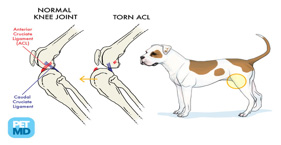
An injury that affects the ligaments, commonly affected areas is the Stifle or knee (Cruciate Ligament) Hock & Tarsus (ankle) Toes Wrist (carpus). With a strain the ligaments overstretch and can rupture or tear, leading to pain and the inability to use the affected limb.
Symptoms Include:
- Difficulty in moving the affected area.
- Weakness of the affected limb.
- Swelling.
- Bruising.
Benefits of Clinical Canine Massage Therapy:
- Assist to repair the damaged fibres and tendons.
- Improve stiffness and soreness.
- Improve movement/gait and posture.
- Breaking down of scar tissue.
- Improvement to comfort levels.
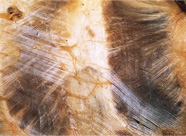
Fascia is a connective tissue (Looks a bit like a spider’s web) that covers each and every muscle, bone, nerve, artery, vein and organ in both the human and dog’s body. It’s like a 3D networking reaching throughout the body and holding everything in place. It is very strong and mobile and in a normal healthy state moves without restrictions.
When fascia becomes tightened to the skin, this increases nerve & pain sensitivity. Skin should slide and glide smoothly with the superficial layer of fascia. When Myofascial restriction and pain are present, this slide & glide is reduced and inhibited.
Myofascial pain in dogs can happen anywhere in the body, although one of the most common areas is the Thorax, and it requires direct bodywork to help relieve it or resolve it.
Causes for Myofascial Pain:
- Activities of daily living (jumping on / off furniture).
- Anything repetitive e.g. High energy ball chasing.
- ‘Body Slamming’ by other dogs.
- Trigger points (knots) cause Myofascial Pain.
- Sporting or working dogs.
- Impact / Trauma/ injury.
- Dehydration and dogs that don’t drink enough water,
- Natural conformation e.g. Hound types are very prone to Myofascial issues.
- Convalescence.
- Old age.
- Stress/anxiety.
- Symptoms Include:
- Skin twitching or flinching.
- Hair flicking up where it hasn’t before.
- Tenderness to touch.
- Tight skin.
- Grimace or have a ‘tickle spot’ around the middle or lower back of the back.
- Excessively rolling on their backs.
- Restricted movement in gait or postural in-balance i.e. limping/lameness, sore back legs.
- Nervous or anxious.
- Mood changes.
- A dog that is reluctant to be handled.
- Pain that persists or worsens over time.
Benefits of Clinical Canine Massage Therapy:
- Relieves sore & painful Trigger Points (knots) in both muscle and fascia.
- Loosens and lengthens the constricting fascia.
- Dog is happier.
- Increases mobility & flexibility.
- Reduces pain.
- Relieves muscle stiffness and joint soreness – improving comfort levels.
- Reduces anxiety levels.
- Breaks down scar tissue and adhesions between the skin, muscles and bones.
- Correcting muscle imbalance.
- If left untreated myofascial can progressively worsen causing unrelenting pain and discomfort i.e. postural issues, mood & Behaviour changes.
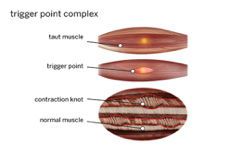
Small, hyper-irritable bands of taught muscle fibre, found within any skeletal muscle in the body commonly known as ‘Knots’ or ‘Myofascial Trigger Points’ which causes extreme pain when touched as they are usually very tender.
Both humans and dogs have trigger points they are the most common muscular issue that can be accumulated over years due to a single muscle or muscle group from muscle stress, being overworked, repetitive motion, causing debilitating pain, restricted range of motion that will affect your dog’s quality of life.
Causes:
- Jumping in and out of the car.
- Jumping on furniture.
- Injury.
- Overcompensation in conditions such as hip dysplasia and arthritis.
- Poor posture.
- Repetitive sports such as agility.
- Sluggish circulation can also cause a trigger point due to lack of activity in a dog.
- Collisions.
- Repetitive exercises such as agility.
Symptoms Include:
- Lameness.
- Stiffness.
- Muscular weakness.
- Slowing down.
- Signs of premature aging.
- Dropping of the shoulder or neck.
- Reduced range of movement.
Benefits of Clinical Canine Massage Therapy:
- Reduced or resolved pain.
- Address areas of overcompensation.
- Increased range of motion.
- Strengthens muscle by releasing the restricted bans of muscle.
- Easier to settle, improved sleep quality.
- Improves sporting or working performance with reduced recovery time.
Tightness & Hypertonicity occur to most humans and dogs at some point in their lives. If your dog is living with a pre-existing condition, such as an orthopaedic condition or muscle injury, these two conditions can make hypertonicity worse as the range of motion is restricted, furthering pain and inhibiting movement and mobility.
Tightness:
Refers to a muscle resting length. Tightness can also be seen as stiffness and lack of range of motion when a dog is on the move. Tightness will over-excite sensory receptors called Muscle Spindles which are responsible for detecting changes in the length of the muscle. When the muscle is tight the fascia becomes abnormal as it begins to tighten, stopping normal muscle function and producing nociceptive pain.
Hypertonic Muscles:
Occurs when a muscle has too much resting tone. Feels hard and inflexible and is prone to trigger points when left (Knots), the muscle cannot relax efficiently to allow it to recuperate and renew as the muscle is held in a persistent state of contraction which fatigues it, leading to a pain cycle.
A tight & hypertonic muscle is a sick muscle…
- Prone to injury i.e. a strain
- Uncomfortable on a daily basis
- Can be worse after rest and loosen up after exercise
- Dull aching chronic pain
- Formation of trigger point with associated referral papters
- Cause deviations in normal posture
Benefits of Clinical Canine Massage Therapy:
- Responds almost immediately to massage.
- Transform the muscle back to its optimal function.
- Supple, flexible muscle that has had the pain resolved.
- Dog is back to normal daily activity.
- Improve comfort levels and mobility of your dog.
- Happier brighter and able to return to normal exercise and have back their general zest for life.
- Frees adhesions that restrict fascia.
- Nipping tightness and hypertonicity in the bud with massage can help reduce the likelihood of straining a muscle.